DC Voltage Drop Calculator
Calculate DC voltage drop for 12 V, 24 V, 48 V and other two-conductor circuits. Enter one-way cable length; the formula includes the return conductor.
Check voltage drop in battery, control, or DC auxiliary wiring.
Result
Voltage drop
11.67%Preliminary calculationΔV = 2 × I × ρ × L / (S × n)Resistive estimate at 20°C. Excludes reactance, temperature correction and AC power-factor effects. Check installation and load limits separately.
Why this result?
Formula and method
Calculate DC voltage drop for 12 V, 24 V, 48 V and other two-conductor circuits. Enter one-way cable length; the formula includes the return conductor.
How to use this calculator
- Enter DC operating current and nominal supply voltage.
- Enter the one-way route length and conductor area.
- Confirm conductor material and equal parallel paths per polarity.
Calculation limits
Includes the return conductor automatically. Resistivity is referenced to approximately 20°C. Terminals, temperature changes and unequal current sharing are excluded.
DC voltage drop formula and the return conductor
A two-conductor DC circuit loses voltage along both the outgoing and return cables. Enter the one-way route length; this tool doubles it internally. At low supply voltages, even a few volts of cable loss can consume a large part of the available voltage.
Input notes
| Input | What to check |
|---|---|
| DC voltage | Enter the supply voltage relevant to the check. Battery and PV operating voltages vary, so consider the required operating range separately. |
| Length and area | Use one-way length in metres and conductor area in mm². The model assumes identical outgoing and return conductors. |
| Operating current | Use current for the operating condition being assessed. Constant-power electronic loads may draw more current as their terminal voltage falls. |
Worked example · initial form values
48 V supply with a 50 m cable route
32 A · 48 V DC · 50 m one-way · 10 mm² copper · one conductor per polarity
ΔV = 2 × 32 × 0.0175 × 50 / 10 = 5.60 V
Voltage drop = 5.60 / 48 × 100 = 11.67%
11.67%
The estimated load-end voltage is 42.40 V. Check that against the load’s minimum operating voltage. The example illustrates cable loss; it is not a recommended installation.
Reducing drop in a DC circuit
- A shorter route, larger conductor area or justified equal parallel paths reduces the calculated drop. For the same fixed input current, a higher supply voltage reduces the percentage, not the volt loss.
- Include fuses, switches, connectors, terminations and cable operating temperature in a detailed loss budget. A chassis return or unequal conductor lengths needs a resistance calculation for the actual path.
Frequently asked questions
Why do I enter the one-way length?
The calculation adds the return conductor internally. Entering the total outgoing and return length would count the return path twice.
Should I enter the complete loop length?
No. Enter only the one-way length. The factor of two includes an equal return conductor; entering loop length would count that return twice.
Does doubling the DC voltage halve the voltage loss?
At the same entered current, cable and length, the volt loss stays the same and the percentage halves. For a fixed-power load, current also changes, so recalculate the operating point.
Can this select a PV string cable or DC breaker?
It checks resistive drop only. PV cable and DC protection selection also need maximum voltage, design current, temperature, installation conditions and equipment-specific DC ratings.
Need help choosing a CHAC product?
Send the system voltage, load current, and installation conditions with your inquiry.
Application example · Illustrative inputs
Keeping voltage available at a remote 24 V auxiliary load
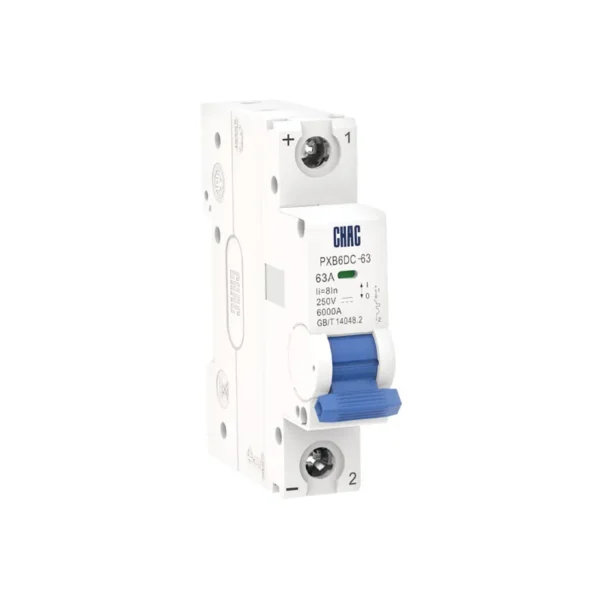
A low-voltage control load can lose a significant share of its supply voltage along a relatively short cable. At 24 V DC and 8 A, a 20 m one-way copper route gives 9.33% drop with 2.5 mm² conductors. Increasing the area to 6 mm² reduces the calculated drop to 3.89%; the tool already includes the outgoing and return paths. Use this comparison before reviewing the load’s operating-voltage limits and CHAC PXB6DC-63 protection data. Cable ampacity, terminal losses, the exact DC voltage variant and pole connections remain separate checks.
Product data: PXB6DC-63 DC Miniature Circuit Breaker
Related CHAC products
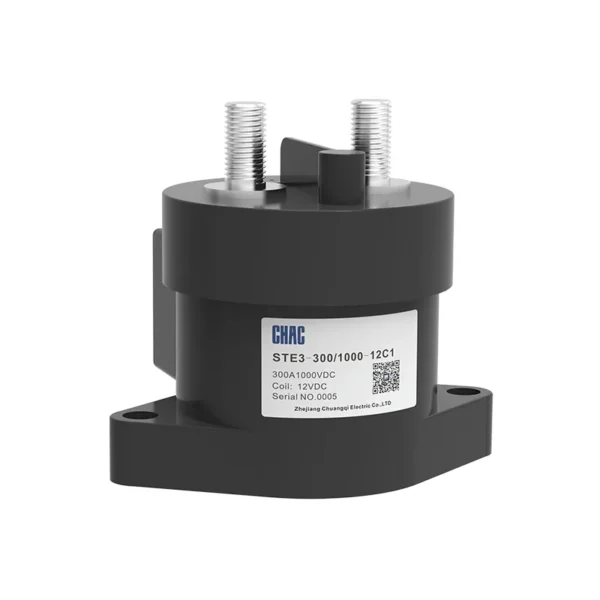
Review DC protection and switching equipment alongside the cable voltage-drop calculation.