Voltage Drop Calculator
Calculate resistive cable voltage drop in volts and percent for single-phase, three-phase or DC circuits. Includes the voltage drop formula and a worked example.
Check voltage drop along a feeder or final-circuit cable run.
Result
Voltage drop
1.21%Preliminary calculationΔV = √3 × I × ρ × L / (S × n)Resistive estimate at 20°C. Excludes reactance, temperature correction and AC power-factor effects. Check installation and load limits separately.
Why this result?
Formula and method
Calculate resistive cable voltage drop in volts and percent for single-phase, three-phase or DC circuits. Includes the voltage drop formula and a worked example.
How to use this calculator
- Select the circuit type and enter operating current and supply voltage.
- Enter the physical one-way route length.
- Set conductor material, cross-sectional area, and equal parallel conductor count.
Calculation limits
K is 2 for DC or single-phase and √3 for balanced three-phase. Copper uses 0.0175 and aluminum 0.0282 Ω·mm²/m at approximately 20°C. Ampacity, reactance and temperature require separate checks.
Voltage drop formula for cable runs
Cable resistance reduces the voltage available at the load. This calculator uses conductor area and resistivity to estimate that loss at approximately 20°C. It is a resistance-only model; the fuller AC calculation also depends on power factor and cable reactance.
Input notes
| Input | What to check |
|---|---|
| Route length | Enter the one-way distance to the load. The circuit multiplier accounts for the return path or the balanced three-phase relationship. |
| Conductor area | Use the metal cross-section in mm², not cable diameter or the outside dimension of the insulation. |
| Parallel paths | Enter equal conductors per phase or polarity. The model assumes the total current divides equally between them. |
Worked example · initial form values
50 m three-phase copper feeder
32 A · 400 V · 50 m one-way · 10 mm² copper · one conductor per phase
ΔV = √3 × 32 × 0.0175 × 50 / 10 = 4.85 V
Voltage drop = 4.85 / 400 × 100 = 1.21%
1.21%
The simplified load-end voltage is 395.15 V. Add upstream circuit drops when assessing the complete supply path, and use operating-temperature cable data for a detailed design.
Interpreting a low percentage
- An acceptable voltage drop does not prove adequate ampacity. Installation method, grouping, ambient temperature, insulation rating and fault withstand remain separate checks.
- Compare the result with the project limit and the connected equipment’s voltage tolerance. Starting conditions and sensitive loads may require a separate assessment; this page does not enforce one universal percentage.
Frequently asked questions
Is this also a cable ampacity calculation?
No. It estimates resistive voltage drop. Check conductor ampacity, operating temperature, installation corrections and fault withstand separately.
Why is my cable manufacturer’s result different?
Manufacturer data may use maximum conductor resistance at operating temperature and include reactance and power factor. This tool uses fixed resistivity at about 20°C and excludes those AC effects.
Will doubling the cable area halve the drop?
Yes, within this simplified model if current, length and material remain the same. That relationship alone does not select a compliant cable size.
Does the result include motor starting voltage drop?
No. It uses the current you enter as a steady value. A motor-starting study needs starting current, source impedance and the equipment’s allowable voltage dip.
Need help choosing a CHAC product?
Send the system voltage, load current, and installation conditions with your inquiry.
Application example · Illustrative inputs
Comparing cable areas on a 70 m equipment feeder
A remote ventilation load can leave a panel builder balancing cable cost against the voltage available at the equipment. For a 40 A, 400 V three-phase feeder with a 70 m one-way copper route, the calculator gives 1.33% resistive drop with 16 mm² conductors. Changing only the area to 25 mm² reduces it to 0.85%. That comparison helps review the cable schedule alongside a CHAC distribution box and its protective devices. Increasing the breaker rating will not reduce the drop; the cable’s temperature, ampacity and the upstream voltage budget must also be checked.
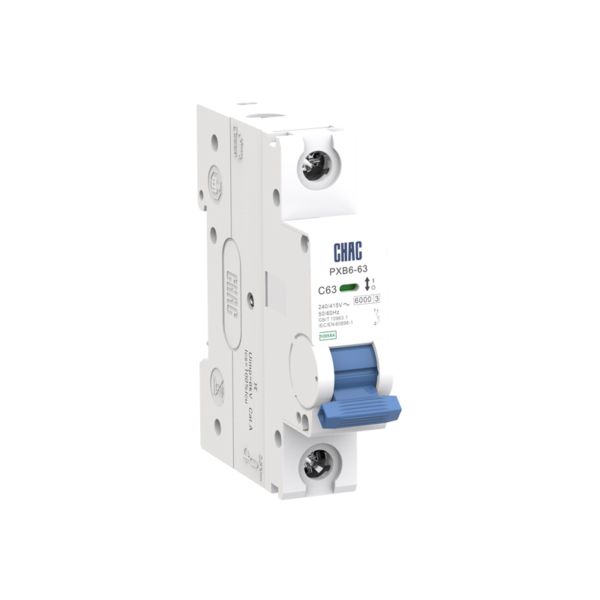
Product data: CQMG20C Series Distribution Box · PXB6-63 Miniature Circuit Breaker
Related CHAC products
Review distribution and protection equipment after checking conductor size and voltage at the load.