Hãy xem xét bài toán nghiệm thu giả định sau: một kỹ sư tủ điện tại Dubai đóng một tủ phân phối vừa được lắp đặt, và một mạch điện vốn hoạt động bình thường trong quá trình kiểm tra khi cửa tủ mở lại bắt đầu bị ngắt sau đó trong ca làm việc. Việc thay thế cầu dao với cùng định mức không giải thích được sự khác biệt này. Câu hỏi hữu ích ở đây là: điều gì đã thay đổi xung quanh nó—nhiệt độ trong tủ, các phụ tải lân cận, tình trạng cáp hay chính mối nối? Một phòng mát và một khoang cầu dao nóng không phải là cùng một môi trường vận hành.
Tóm tắt: Giảm định mức của cầu dao tự động có nghĩa là sử dụng dòng điện cho phép theo nhà sản xuất trong điều kiện lắp đặt thực tế. Bảng ngắt mạch đã công bố của PXB6-63 sử dụng nhiệt độ tham chiếu là 30°C. Nhiệt độ tham chiếu này không phải là nhiệt độ môi trường tối đa phổ quát, cũng không phải là hệ số hiệu chỉnh. Trước khi tăng kích thước cầu dao, hãy lấy chính xác dữ liệu nhiệt độ về định mức, đánh giá tủ chứa có tải và kiểm tra lại bảo vệ cáp.
Bạn nên sử dụng nhiệt độ nào để hiệu chỉnh dòng điện định mức của cầu dao?
Phù hợp Đánh giá nhiệt độ của cầu dao điện Cần phải được đọc trong các điều kiện tham chiếu đã nêu. Nhiệt kế treo tường đo nhiệt độ của phòng; nó không xác định được nhiệt độ của không khí xung quanh một thiết bị bên trong tủ chứa đầy tải, đặc biệt là ở gần một nguồn nhiệt khác. Tương tự, hình ảnh nhiệt của một đầu cuối chỉ hiển thị nhiệt độ bề mặt, và giá trị này không thể được nhập trực tiếp vào bảng hiệu chỉnh theo nhiệt độ môi trường.
Các đặc tính cắt mạch đã công bố của PXB6-63 xác định 30°C là nhiệt độ hiệu chuẩn tham chiếu. Bảng này cũng phân biệt điều kiện khởi động nguội với thử nghiệm được thực hiện sau một giai đoạn mang tải trước đó. Những chi tiết đó rất quan trọng khi diễn giải hoạt động. Một bội số dòng điện và một giới hạn thời gian thuộc về một trình tự thử nghiệm cụ thể, chứ không phải để mô tả mọi điều kiện tại hiện trường.
Ghi lại vị trí đo nhiệt độ, các mạch điện đang được cấp tải, trạng thái đóng/mở của cửa tủ và tình trạng hoạt động bình thường của quạt cũng như bộ lọc. Tuân thủ hướng dẫn của nhà sản xuất để xác định phương pháp và vị trí đo phù hợp. Nhân viên có trình độ chuyên môn phải lên kế hoạch thực hiện mọi phép đo xung quanh thiết bị điện; việc mở tủ đang mang điện để lấy số liệu thuận tiện không phải là một phương pháp nghiệm thu vận hành.
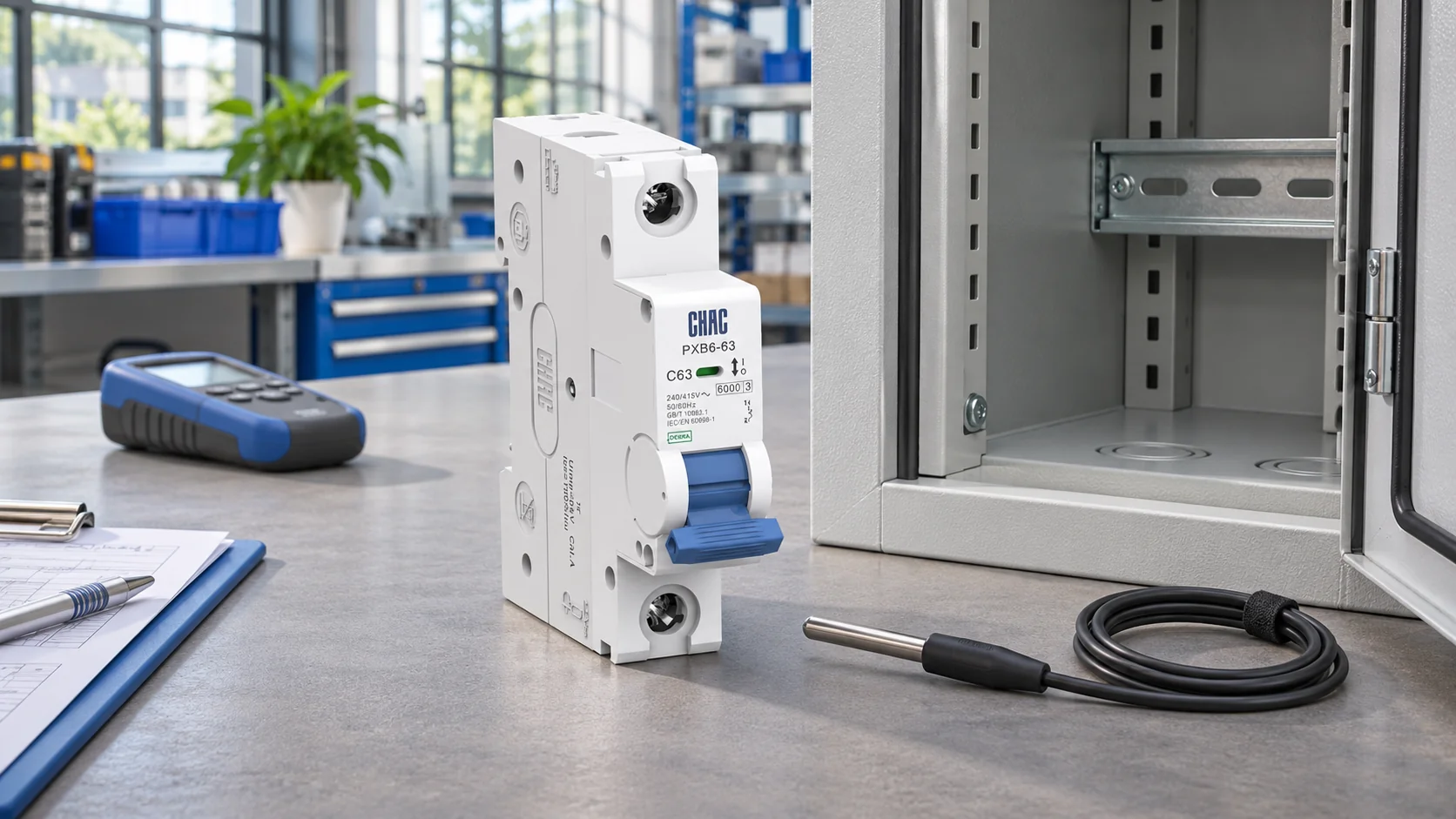
Kiểm tra hệ số giảm dòng của cầu dao cùng với các giới hạn dòng điện của cáp và cụm dây dẫn.
Giảm công suất theo nhiệt độ đề cập đến một yếu tố ảnh hưởng đến dòng điện sử dụng được. Việc sắp xếp các dây dẫn, phương pháp lắp đặt cáp, mức độ phù hợp của đầu nối và đặc tính tăng nhiệt của toàn bộ cụm lắp ráp đều tạo ra những giới hạn khác. Hệ số hiệu chỉnh dành cho cáp không thể áp dụng cho MCB, và hệ số hiệu chỉnh của MCB cũng không thể xác định được khả năng tải của toàn bộ tủ điện.
IEC 61439-1:2020 đề cập rõ ràng đến các cụm lắp ráp và giới thiệu dòng điện định mức nhóm trong mối liên hệ với việc kiểm tra độ tăng nhiệt. Phạm vi áp dụng của tiêu chuẩn này giải thích tại sao việc kiểm tra một thành phần riêng lẻ không thể giải quyết vấn đề của toàn bộ cụm lắp ráp. Áp dụng phần cụm lắp ráp có liên quan cùng với các quy tắc chung; việc kiểm tra phù hợp phụ thuộc vào thiết kế và mục đích sử dụng dự kiến.
| Câu hỏi | Những gì nó mô tả | Cần có bằng chứng |
|---|---|---|
| Dòng điện định mức của cầu dao là bao nhiêu? | Công suất định mức của thiết bị được chọn trong các điều kiện đã công bố | Mẫu chính xác, số lượng cọc, độ cong và định mức |
| Dòng điện cho phép ở nhiệt độ này là bao nhiêu? | Sự hiệu chỉnh nhiệt độ của nhà sản xuất | Bảng áp dụng và các điều kiện tham chiếu tương ứng |
| Cáp có thể truyền tải những gì? | Khả năng tải của dây dẫn trong quá trình lắp đặt | Tính toán cáp, bao gồm các hiệu chỉnh áp dụng |
| Tập tin DLL đã tải có thể chứa những gì? | Kết hợp giữa vỏ bọc và sơ đồ mạch điện | Applicable assembly verification and loading assumptions |
Where a manufacturer explicitly defines a multiplicative factor, the arithmetic may be straightforward. For illustration only, a hypothetical factor of 0.90 applied to 32 A gives 28.8 A. This is not PXB6 correction data, a recommended load or evidence that several correction factors may be multiplied together. The manufacturer’s method determines whether and how those factors can be combined.
Investigate panel heating before increasing the breaker rating
Increasing a breaker from 32 A to 40 A changes the protection decision. It may leave the existing conductor insufficiently protected, even if it stops an inconvenient trip. Changing from curve B to C or D also changes the magnetic trip characteristic; it does not provide a general solution to heat-related overload behaviour. The B, C and D curve guide explains that separate selection issue.
Review the measured load profile and investigate abnormal heating or connection defects before treating every trip as a derating problem. A poorly made termination requires correction under the manufacturer’s installation instructions. More ventilation cannot make an unsuitable termination acceptable. Equally, a larger enclosure or revised spacing needs to be evaluated as an assembly change, including any effect on ingress protection and maintenance.
| Tình trạng quan sát được | Useful review | Avoid assuming |
|---|---|---|
| Operation changes after other circuits are loaded | Actual simultaneous loading and local thermal conditions | Every circuit can carry its headline current simultaneously |
| One termination is abnormally hot | Conductor, terminal condition and approved connection procedure | A general derating factor repairs a connection fault |
| Behaviour changes with the cabinet door open | Normal closed-door service conditions | An open-door trial validates the finished panel |
| A higher-current replacement is proposed | Cable protection, fault duty and assembly verification | A larger rating is an equivalent replacement |
The purchasing cost includes engineering time as well as hardware. A low-cost replacement followed by another site visit can cost more than resolving the enclosure design before manufacture. Compare corrective options by their effect on protection, assembly requirements, downtime and future servicing; do not select the cheapest component change in isolation.
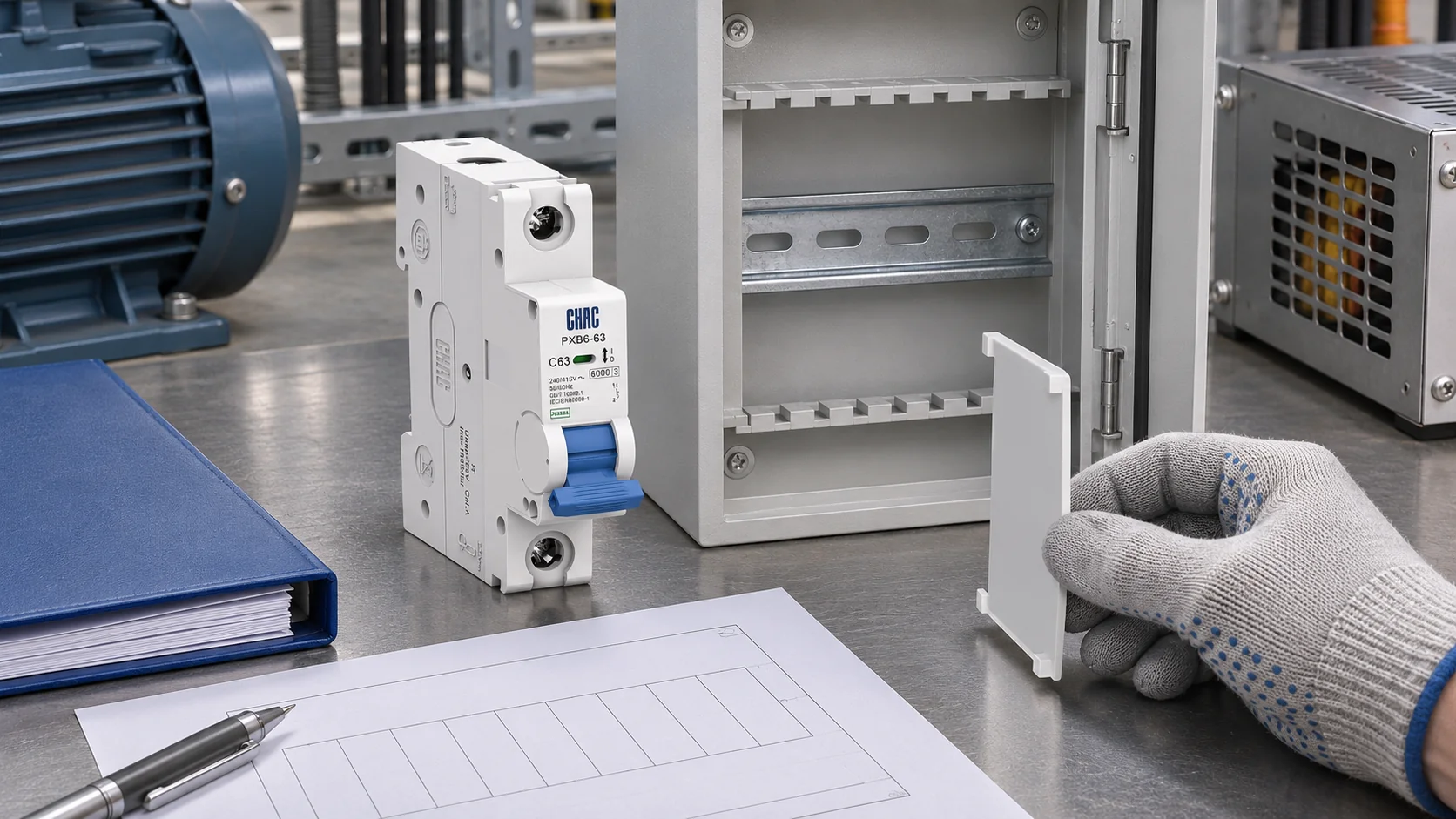
How to request temperature correction data for your PXB6 configuration
CHAC PXB6-63 product information lists current options from 6 A to 63 A, pole options from 1P to 4P, and B, C and D curves. Those choices identify different order configurations. The public 30°C tripping reference does not supply a complete current-versus-temperature table for every configuration.
Send the exact PXB6 designation, intended load, pole arrangement, local ambient-temperature estimate, enclosure arrangement and simultaneous-loading assumptions when requesting the applicable correction data. Ask whether the supplied method accounts for adjacent devices and whether additional assembly checks remain necessary. Keep the response and revision with the panel design.
IEC TR 61439-0:2022 provides guidance for specifying assembly functions and characteristics, including current-rating considerations. Use that specification discussion to agree the intended loading and service conditions with the assembly manufacturer. It is a technical report, not a product certificate or a source of a universal PXB6 correction factor.
IEC 60898-1 is the product-standard reference on the published PXB6 page. IEC 61439 addresses the assembly, while the applicable installation rules govern circuit and conductor protection. These are different scopes. A catalogue standard reference does not establish conformity of a modified panel or prove that an order carries every possible approval.
Common questions about PXB6 derating in hot panels
What does circuit breaker derating mean in a hot electrical panel?
It means limiting usable current according to the manufacturer’s data for the actual thermal conditions. It does not change the number printed on the breaker or automatically change its trip setting. The permitted circuit load must also satisfy conductor and assembly requirements.
Which ambient temperature should be used when reading a breaker’s derating table?
Use the ambient temperature and measurement conditions defined by that manufacturer’s table, normally relating to the environment around the device. Do not substitute room temperature or a measured terminal surface temperature without checking the instructions. Record the enclosure’s representative loaded condition.
How do adjacent devices and enclosure ventilation affect usable breaker current?
They can change the local thermal environment and the assembly’s temperature rise. The size of the effect depends on the actual arrangement, loading and approved correction method. Do not borrow a grouping factor from another product family.
Is temperature derating the same as changing the trip setting?
No. Derating concerns permitted use under particular conditions, while a trip setting determines a protection threshold where adjustment is available. A fixed-rating MCB does not acquire an adjustable overload setting because a correction table is used.
Where can I obtain the temperature correction data for the exact PXB6 rating?
Request it from CHAC with the complete model, current, curve, poles and panel conditions. Ask for the applicable document revision and any limits on using it. The published reference-temperature tripping table alone is insufficient to calculate every high-temperature operating case.
Can one temperature derating factor be applied to every MCB model?
No. Different products can have different reference conditions and thermal behaviour. Apply a factor only to the models and arrangements covered by its source, including any stated restrictions.
What assembly conditions should be checked before increasing a breaker rating?
Check the design load, cable capacity, terminations, simultaneous loading, enclosure ventilation, fault duty and coordination. Review the applicable assembly verification and local installation requirements. Resolve the cause of the original trip before approving a larger protective device.
Tham khảo
- IEC 61439-1:2020: assembly service conditions and verification, including group rated current.
- IEC 60947-2:2024: circuit-breaker scope for instructed or skilled users; a separate product-standard context.
- IEC TR 61439-0:2022: guidance for specifying assemblies.
The published PXB6-63 technical data linked above supplies the model range and the 30°C test reference. No PXB6-specific high-temperature correction factor is asserted in this article.
Specify the load and the conditions around the device together. For a PXB6 review, send CHAC your configuration and panel conditions so the appropriate technical information can be confirmed before ordering.