A panel purchase can stall over a small missing detail: the cable schedule specifies stranded conductors, but the breaker quotation does not identify approved terminal preparation or ferrules. For a PXB6 order, resolving those details before procurement is more useful than discovering that a conductor merely fits the opening.
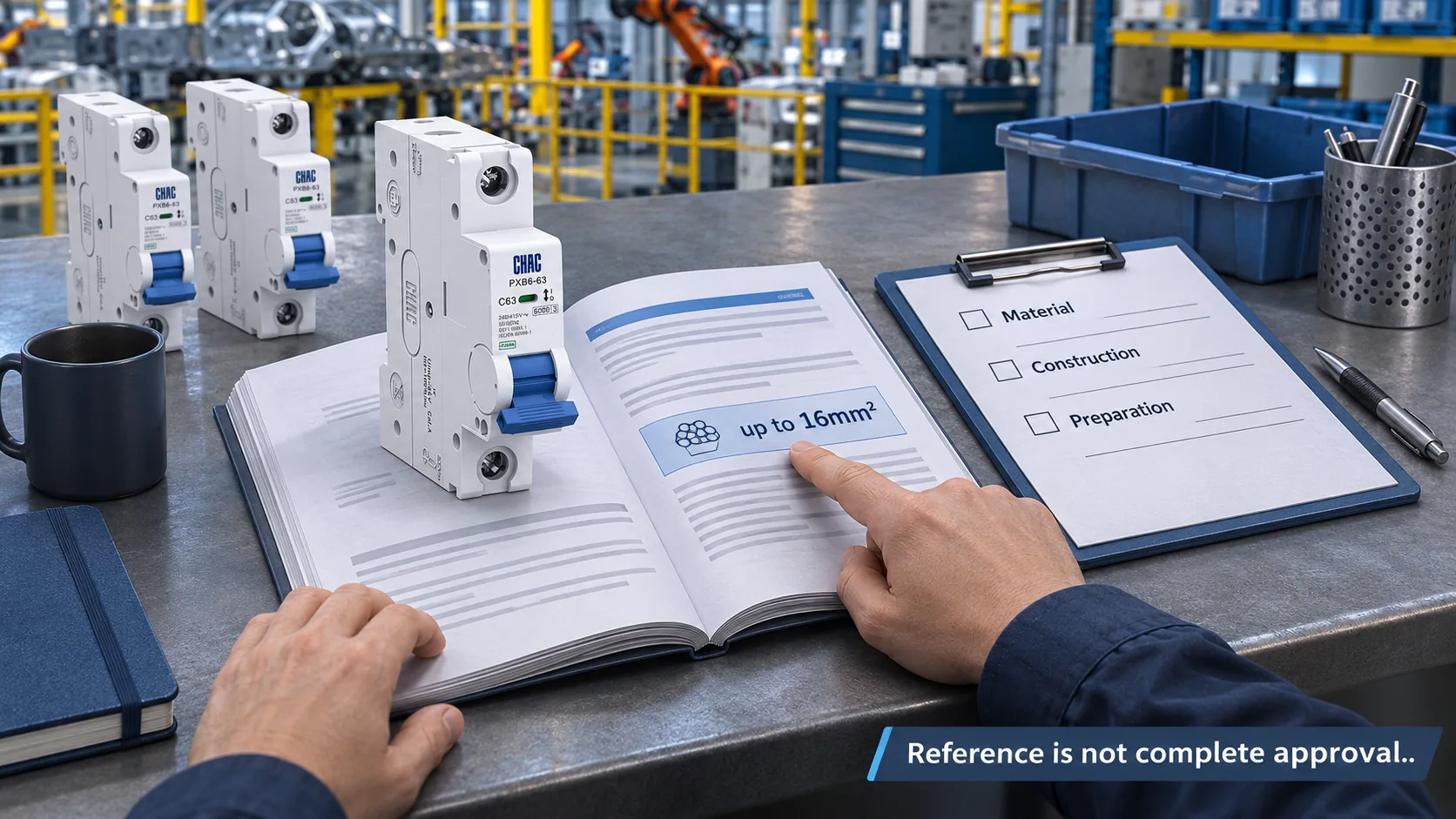
A reliable circuit breaker connection requires documented compatibility between the exact breaker variant, conductor and termination arrangement. The published PXB6-63 conductor reference is up to 16mm²; it does not establish every permitted material, conductor construction, terminal occupancy, ferrule, stripping length or tightening torque. Obtain the selected variant’s instructions before approving the connection design.
What does the published PXB6-63 data establish about its terminals?
The CHAC PXB6-63 product page provides a conductor reference alongside electrical selection data. These are useful shortlist inputs, but an electrical rating and a terminal acceptance specification answer different questions.
| Published item | What it supports | What still needs confirmation |
|---|---|---|
| Conductor reference up to 16mm² | A preliminary cable-interface check | Permitted size range for each material, construction and preparation |
| Rated current 6A–63A | Comparison with circuit design requirements | Conductor ampacity and installation conditions; terminal capacity alone is insufficient |
| B / C / D options | Trip-characteristic shortlisting | Load inrush and fault-clearing performance, not terminal compatibility |
| 45mm terminal-centre reference | An interface dimension for review | Actual enclosure and connection geometry; not proof of frame or busbar fit |
For example, a cable below the published area reference is not automatically approved if its material or ferrule arrangement is undocumented. Likewise, a larger terminal opening does not establish permission for multiple conductors.
The page references IEC 60898-1 and GB/T 10963.1 and lists certifications. Confirm the documents and their scope for the ordered configuration and destination market rather than treating a series-level statement as proof for every unit.
Why do conductor preparation and terminal occupancy need separate approval?
An MCB terminal must retain the intended conductor arrangement and maintain the required electrical contact. Cross-sectional area alone does not describe that arrangement: solid, stranded and ferruled conductors present different contact shapes. Approval for one preparation does not establish approval for another.
Two conductors that physically enter a circuit breaker terminal may not receive suitable clamping pressure. Different sizes or constructions can make the result less predictable. A twin ferrule is also a distinct termination arrangement, not an automatic way to obtain permission for two conductors.
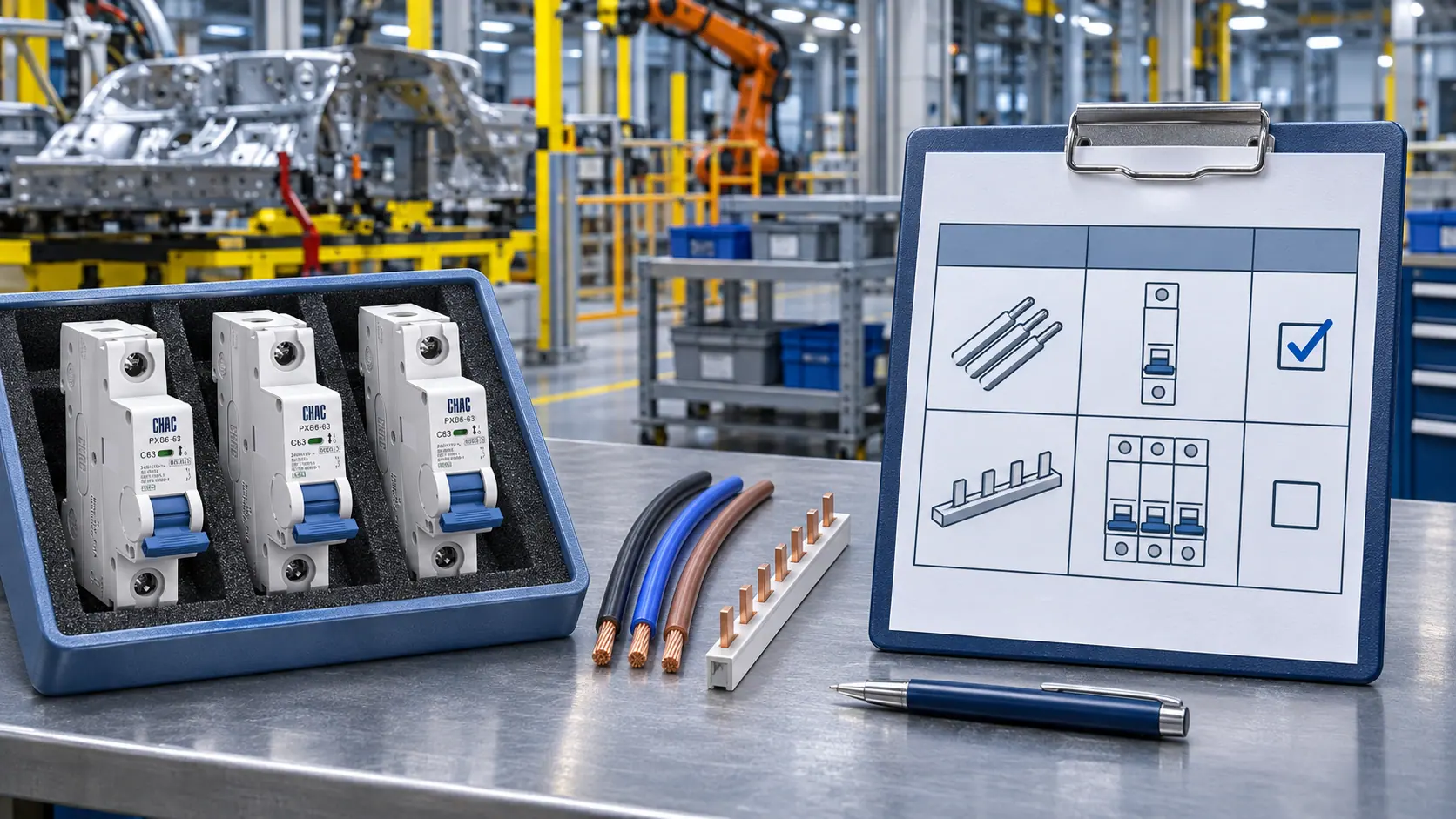
Ferrule compatibility should therefore cover conductor construction, ferrule form, sleeve dimensions and the resulting terminal interface. The selected breaker instructions and termination-system documentation must be consistent. Insulated collars and sleeve geometry can affect available space even when the nominal conductor area appears suitable.
The same distinction applies to a comb busbar and cable. Separate-looking entry openings do not prove that simultaneous use is permitted. Request explicit evidence for the breaker variant, busbar interface and combined arrangement.
Assembly integration remains a separate concern. The official IEC 61439-1:2020 publication information addresses low-voltage switchgear and controlgear assemblies and describes temperature-rise verification changes. This assembly-level context is not certification of a particular PXB6 unit or approval of a proposed terminal combination.
What information should buyers resolve before releasing a PXB6 order?
Use a connection schedule alongside the breaker schedule. For each circuit breaker cable, record the intended conductor and termination rather than asking only for a maximum cable size. Keep unresolved details visible as approval holds.
| Buyer input | Evidence requested | Decision affected |
|---|---|---|
| Exact breaker designation and poles | Matching instructions and terminal drawing | Whether the document covers the ordered variant |
| Conductor material, size and construction | Permitted combinations and preparation | Cable and termination procurement |
| Single, multiple or busbar-plus-cable occupancy | Explicit acceptance of that arrangement | Distribution layout approval |
| Proposed supply orientation | Line/load identification and permitted direction | Panel connection design |
| Termination and inspection requirements | Stripping length, torque and acceptance criteria | Installer documentation and quality records |
The CHAC MCB range overview can support series comparison, but connection details must remain tied to the selected variant. Commercial consultation is a route to obtaining those details, not evidence that a proposed arrangement is already approved.
Frequently asked questions
Which conductor sizes and materials are approved for the selected PXB6 terminal?
The published PXB6-63 page gives a conductor reference up to 16mm², not a complete approval matrix. Obtain the selected variant’s permitted size ranges, materials and conductor constructions; do not infer aluminium acceptance or a minimum size.
Can two conductors share one MCB terminal if they physically fit?
Physical fit is insufficient. The exact terminal must explicitly permit the proposed number, sizes, constructions and preparation of conductors. Without that evidence, the shared-terminal arrangement remains unconfirmed.
What stripping length and tightening torque should be taken from the breaker instructions?
Use the values applicable to the exact terminal and conductor arrangement in the selected variant’s instructions. Neither value is established here. Generic MCB values or instructions from a similar-looking model are not substitutes.
How should ferrule compatibility be checked for stranded conductors?
Match the breaker’s accepted termination types with the conductor and ferrule documentation, including sleeve dimensions and preparation requirements. Single and twin ferrules require their own acceptance evidence; nominal conductor area alone does not settle compatibility.
Can a comb busbar and a cable be connected together in the same terminal?
Only where the exact breaker and busbar documentation explicitly permits the combined arrangement. Apparent space or separate entry openings do not establish compatibility, correct engagement or acceptable shared clamping.
Does the selected breaker permit supply connection from either end?
The available product information does not establish bidirectional supply permission. Confirm the selected variant’s line/load markings, connection diagram and supply-direction instructions before approving the panel layout.
What checks should a qualified installer complete before energizing a new breaker connection?
The documented review should cover device identity, conductor and accessory compatibility, termination conformity, insulation condition, mechanical security, supply orientation and required assembly verification records. Inspection and applicable testing belong within qualified, safely isolated procedures, not improvised live checks.
For PXB6 procurement, treat terminal compatibility as a documented design input rather than a last-minute fit check. Send the exact variant, conductor schedule and proposed connection arrangement to CHAC for technical consultation, and resolve missing acceptance evidence before releasing the connection design.