Busbar Calculator — Current-Density Estimate
Estimate a rectangular busbar current reference from area, assumed current density and a derating factor. Actual busbar ampacity requires temperature-rise verification.
An area-based reference for a busbar study. It does not establish a tested ampacity rating.
Result
Current-density reference
180.00APreliminary calculationIref = width × thickness × J × factorNot a verified ampacity rating. Material, temperature rise, enclosure, orientation, spacing, joints and testing determine actual capability.
Why this result?
Formula and method
Estimate a rectangular busbar current reference from area, assumed current density and a derating factor. Actual busbar ampacity requires temperature-rise verification.
How to use this calculator
- Enter the dimensions of a single rectangular busbar.
- Enter a current density justified for your own study.
- Apply a user-defined derating factor and independently verify temperature rise.
Calculation limits
The default density is illustrative, not a standard or CHAC rating. This tool does not verify short-circuit withstand or enclosure temperature rise.
Busbar calculation and copper bus bar ampacity
The calculation multiplies a rectangular busbar’s cross-sectional area by a current density you supply, then applies your derating factor. It helps compare assumptions and dimensions. It does not predict temperature rise or establish the continuous-current rating of an assembly.
Input notes
| Input | What to check |
|---|---|
| Width × thickness | Enter one rectangular bar’s metal dimensions in mm. This tool does not model a multi-bar arrangement or current sharing. |
| Current density J | Enter a value supported by your design study. The default 1.2 A/mm² is illustrative; it is not a universal copper rating. |
| Derating factor | Enter a justified factor from above zero to 1.00. It is applied once and does not automatically account for enclosure or ambient conditions. |
Worked example · initial form values
30 mm × 5 mm rectangular busbar
Width 30 mm · thickness 5 mm · assumed J 1.2 A/mm² · factor 1.00
Area = 30 × 5 = 150 mm²
Current reference = 150 × 1.2 × 1.00 = 180 A
180.00 A
180 A follows from the entered assumption only. It is not a tested CHAC rating or a statement that the bar can carry this current in any enclosure.
Conditions that determine actual capability
- Material conductivity, surface condition, orientation, ventilation, spacing, nearby phases and joint design affect heating. Equal area does not guarantee equal cooling or AC resistance.
- Use applicable manufacturer data and assembly temperature-rise verification. Check short-circuit thermal and mechanical withstand separately; a density calculation covers neither.
Frequently asked questions
Is the default current density a CHAC rating?
No. It is an illustrative input for an area-based reference. Actual capability depends on material, enclosure, orientation, cooling, connections and temperature-rise verification.
Why do published busbar ampacity tables give different currents?
Tables assume particular material, ambient temperature, permitted temperature rise, orientation, frequency and surface condition. The Copper Development Association tables state these conditions; they are not unconditional ratings.
Can I use the same current density for aluminium?
Not without justification. This calculator has no material-dependent thermal model. You must supply a density appropriate to the actual conductor and installation.
Can two parallel bars carry exactly twice the current?
Do not assume so. Spacing, proximity effects, cooling and unequal current sharing can change performance. Verify the actual arrangement using appropriate data or testing.
Need help choosing a CHAC product?
Send the system voltage, load current, and installation conditions with your inquiry.
Application example · Illustrative inputs
A preliminary busbar check during panel layout
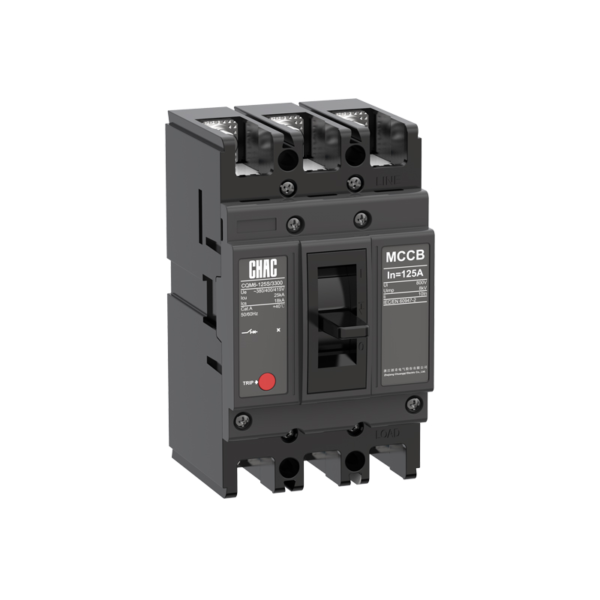
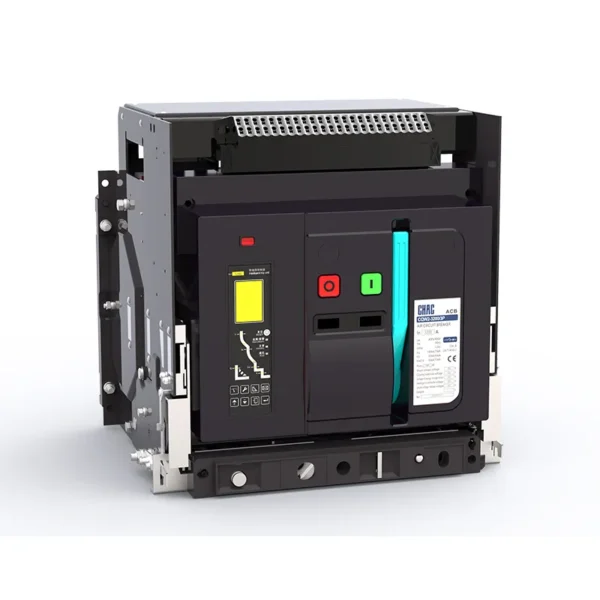
During an early distribution-panel layout study, a 40 × 5 mm rectangular busbar has a cross-sectional area of 200 mm². With an assumed current density of 1.2 A/mm² and a user factor of 0.80, this calculator gives a 192 A study reference. Neither assumption is a CHAC busbar rating or a standard ampacity limit. The result can accompany a review of CHAC CQM6 or CQW2 equipment, but the complete assembly still needs thermal and short-circuit verification. A breaker frame rating alone cannot confirm the current capability of the busbar and its joints.
Product data: CQM6 Standard Molded Case Circuit Breaker (MCCB) OEM Manufacturer · CQW2 Series Air Circuit Breaker
Related CHAC products
Review the protective devices used in the assembly. Busbar temperature rise requires a separate check.