Distribution Board Load Calculator
Electrical load calculator for distribution boards: estimate demand kW, kVA, feeder current and spare capacity for single- or balanced three-phase supplies.
Sum four load groups using their power factors and demand factors, then review feeder current and spare capacity for a balanced board.
Result
Estimated feeder current
35.74AEntered current reserve target metPdem = Σ(P × demand); Qdem = Σ(Pdem × tan acos PF); S = √(Pdem² + Qdem²); I = S × 1,000 / (K × V)Demand factors are your assumptions. All groups are treated as lagging at the same supply and balanced in three-phase mode. Spare amperes do not establish thermal, fault or physical spare-way capacity.
Why this result?
Formula and method
Electrical load calculator for distribution boards: estimate demand kW, kVA, feeder current and spare capacity for single- or balanced three-phase supplies.
How to use this calculator
- Enter electrical input kW, lagging power factor and a justified demand factor for each group. Use zero kW for unused groups.
- Choose supply voltage and phase. Three-phase mode assumes balanced loading.
- Compare estimated feeder current, spare current and the rating reference with the actual board and installation.
Calculation limits
No automatic NEC/IEC diversity allowance, phase allocation, harmonic neutral-current assessment, motor feeder rule or enclosure temperature-rise verification is applied. Leading power factors and mixed supply systems are outside this model.
Electrical load calculation for a distribution board
For each load group, the tool applies your demand factor to electrical input kW and derives lagging reactive power from its power factor. It sums active and reactive power before calculating total kVA. It does not simply add unlike kW and kVA values.
Input notes
| Input | What to check |
|---|---|
| Four load groups | Use electrical input power for lighting, sockets, motors and other loads. Enter zero kW for an unused group. |
| Power factor and demand | Demand is a user assumption. All entered power factors are lagging displacement values; leading or harmonic-distorted loads need another model. |
| Board rating and reserve | Reserve is unused current capacity. A 20% target means calculated demand should be no more than 80% of the chosen current rating. |
Worked example · initial form values
Balanced 400 V board with three active load groups
Lighting: 5 kW / PF 0.95 / 100%; sockets: 10 kW / PF 0.90 / 60%; motor input: 11 kW / PF 0.85 / 100%
Demand active power = 5 + 10 × 0.60 + 11 = 22 kW.
Q = 11.3665 kvar; S = 24.7628 kVA; I = 24,762.8 / (√3 × 400) = 35.74 A.
35.74 A
At the stated inputs, compare the estimated feeder current with the entered board rating. The result is not a phase schedule, motor-feeder code calculation or temperature-rise check.
Electrical load calculation: connected load and demand load
Connected load is the sum of the equipment’s electrical input ratings. Demand load applies the project’s expected simultaneous-use factors. In this electrical load calculator, lighting, sockets, motors and other loads each have their own input kW, power factor and demand factor.
For a 10 kW socket group with an entered demand factor of 60%, the group contributes 6 kW to active demand. That assumption must come from the project; the tool does not supply a residential code schedule. For motors, convert shaft output to electrical input using efficiency before entering kW.
Electrical panel load: why kW and kVA are different
For each lagging load group, reactive power is Q = P × tan(arccos(PF)). Add the groups’ demand kW and kvar separately, then calculate apparent power S = √(P² + Q²). This retains the effect of different power factors instead of averaging them without weighting.
Feeder current is 1,000 × S / V for single-phase supply, or 1,000 × S / (√3 × V) for a balanced three-phase supply, with S in kVA. The example totals 22 kW and 11.37 kvar, giving 24.76 kVA and 35.74 A at 400 V three-phase.
Distribution board capacity and room for future loads
A reserve target describes how much of the chosen current rating remains unused. Keeping 20% available means using no more than 80% of the rating. For the example’s 35.74 A demand, the corresponding rating reference is about 44.68 A before selecting an actual assembly and protective device.
An electrical distribution board also has physical, thermal and fault-duty limits. Check incoming protection, busbar rating, enclosure conditions and available circuit ways. A balanced feeder estimate cannot identify the highest-loaded phase when individual single-phase circuits are distributed unevenly.
Spare amperes are not spare ways
- The available current shown here does not identify spare DIN modules, busbar temperature margin or permitted fault duty. Review those against the complete distribution assembly.
- Three-phase loads are assumed balanced. Individual single-phase circuits, harmonics and neutral current can make the most heavily loaded conductor more limiting than this equivalent current.
Frequently asked questions
Are the demand factors taken from NEC or IEC?
No. You supply them for the actual project. The initial example is not a prescribed diversity schedule.
Does 20% reserve mean multiplying demand by 1.20?
No. Here it means keeping demand at or below 80% of rating, so the current-rating reference is demand current divided by 0.80.
Should motor shaft kW be entered directly?
No. Enter electrical input kW. Convert shaft output using efficiency first, or use measured input power.
Can this show which phase is overloaded?
No. Three-phase mode uses a balanced equivalent. A phase-by-phase circuit schedule is needed to identify unbalance or the highest phase current.
Can this electrical panel load calculator replace a residential code worksheet?
No. It uses your entered demand factors rather than a prescribed residential calculation method. Use the relevant local rules and project data to establish demand before comparing the electrical distribution board rating.
Why does spare current capacity not tell me how many circuits I can add?
Additional circuits need space and suitable protection as well as current capacity. Their demand, phase allocation, cable routes and the assembly’s thermal and fault ratings must also be checked.
Need help choosing a CHAC product?
Send the system voltage, load current, and installation conditions with your inquiry.
Application example · Illustrative inputs
Separating connected load from workshop distribution demand
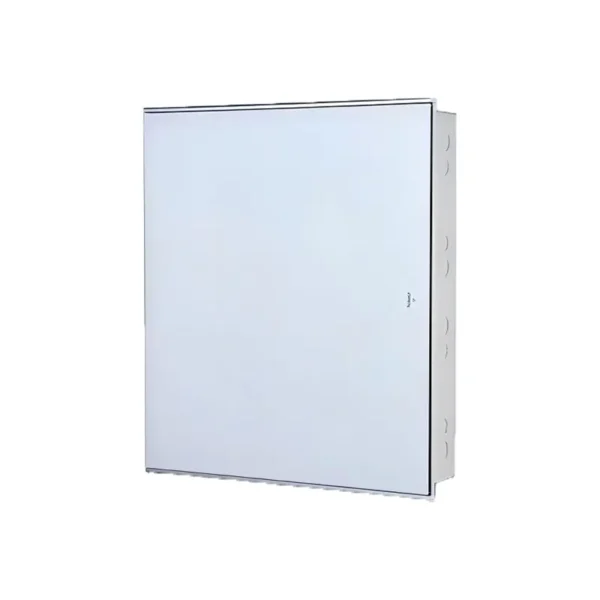
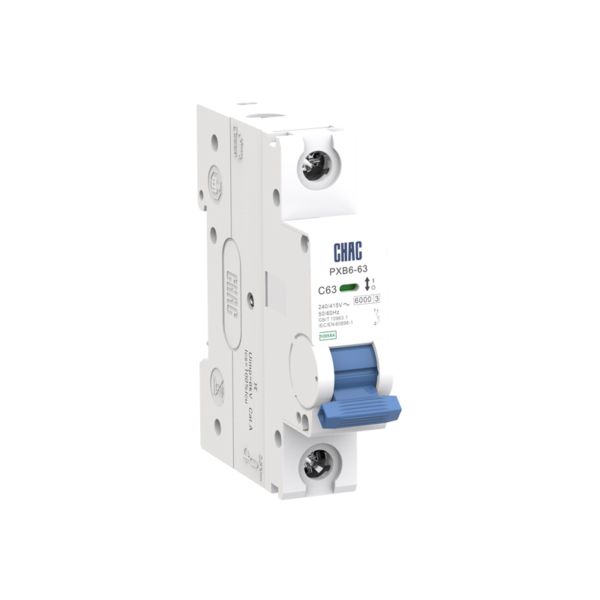
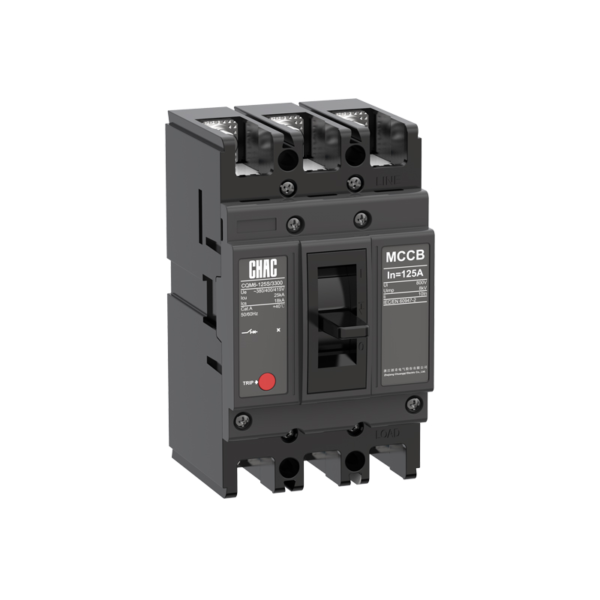
For a workshop-board example, enter 8 kW of lighting, 12 kW of socket loads, 15 kW of motor electrical input and 3 kW of other loads, at power factors 0.95, 0.90, 0.85 and 1.00. Applying 60% demand only to the socket group gives 33.20 kW demand and 52.83 A on a balanced 400 V supply. A 100 A study reference clears the entered 20% unused-current target. These are planning assumptions, not a CQMG20C assembly rating. Use the result when reviewing CHAC distribution boxes and protection, then check phase allocation, busbars, thermal conditions and the approved load schedule.
Product data: CQMG20C Series Distribution Box · CQM6 Standard Molded Case Circuit Breaker (MCCB) OEM Manufacturer
Related CHAC products
Review the distribution box and protective devices against the board’s calculated load and circuit layout.