kW to Amps Calculator
Convert kW to amps for three-phase, single-phase or DC loads. Enter voltage and power factor, or switch to kVA for apparent power.
Estimate load current before reviewing a circuit breaker or distribution feeder.
Result
Operating current
18.68APreliminary calculationI = P × 1,000 / (√3 × V × PF)Use electrical input power. For motors with only shaft output known, use the motor calculator. Three-phase loads are assumed balanced.
Why this result?
Formula and method
Convert kW to amps for three-phase, single-phase or DC loads. Enter voltage and power factor, or switch to kVA for apparent power.
How to use this calculator
- Select your circuit type and real power (kW) or apparent power (kVA).
- Enter supply voltage; three-phase calculations use line-to-line voltage.
- Enter power factor when using real AC power.
Calculation limits
kVA is an AC quantity. Selecting DC switches the input to kW. Formula references here use watts; the form converts kW or kVA by multiplying by 1,000.
kW to amps: three-phase and single-phase formulas
For a balanced three-phase load, the result is the current in each line conductor. Enter the total power of the load, not one third of it. The √3 term accounts for the relationship between line voltage and phase voltage.
Input notes
| Input | What to check |
|---|---|
| kW or kVA | Use kW for real electrical input power. Use kVA for apparent power; the calculator then removes the power-factor input. |
| Voltage | Use line-to-line voltage for three-phase loads, or the voltage across the load for single-phase and DC circuits. |
| Power factor | Use the measured or specified value at the operating load. At the same kW and voltage, a lower power factor requires more current. |
Worked example · initial form values
11 kW load on a 400 V three-phase supply
Three-phase · 11 kW electrical input · 400 V line-to-line · PF 0.85
I = 11,000 / (√3 × 400 × 0.85)
I = 18.68 A per line conductor
18.68 A
This is operating current. It is not an automatic breaker or cable recommendation. If 11 kW is motor shaft output, account for efficiency in the motor-current calculator instead.
Before using the current for equipment selection
- Check whether the load is balanced. One equivalent three-phase value can conceal an overloaded phase on an uneven distribution board.
- Review starting current, duty, ambient temperature and conductor ampacity before choosing protection. A running-current calculation does not model these conditions.
Frequently asked questions
Which power value should I enter?
Use electrical input power. kW is real power; kVA already includes the relationship described by AC power factor. For motor shaft output, choose the motor-current tool instead.
Do I divide a three-phase kW rating by three?
No. Enter the total three-phase power. The formula already includes the three-phase relationship and returns line current.
Should I enter 230 V or 400 V?
For a 230/400 V system, use 400 V for a three-phase load and 230 V for a single-phase load connected between phase and neutral. Confirm the actual connection first.
Why does the kVA calculation omit power factor?
Apparent power is S = √3 × V × I for a balanced three-phase load. Power factor is needed when converting real power, P = S × PF, to current.
Need help choosing a CHAC product?
Send the system voltage, load current, and installation conditions with your inquiry.
Application example · Illustrative inputs
Checking a commercial feeder before breaker selection
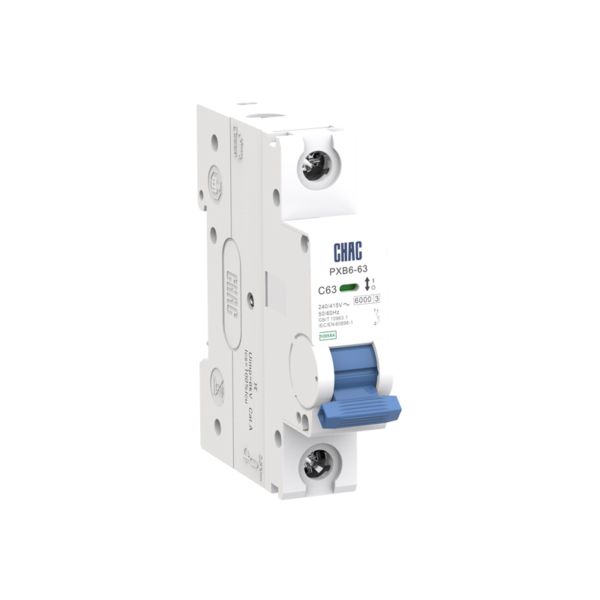
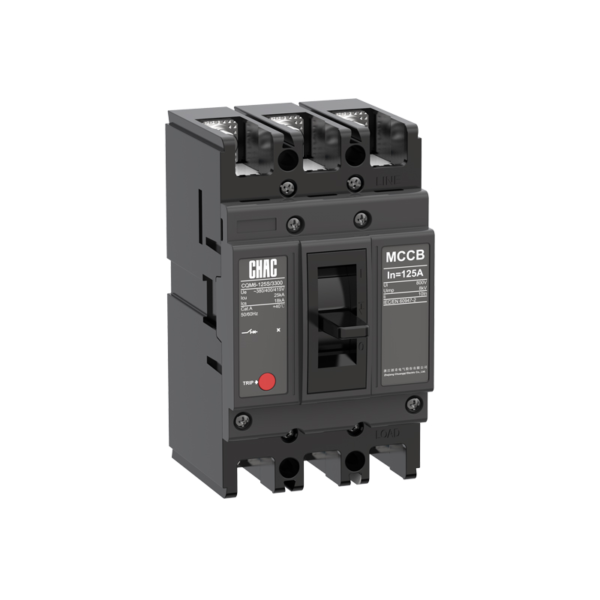
For a commercial distribution panel, take a balanced 18.5 kW electrical load at 400 V and power factor 0.92. Entering these values gives 29.02 A per line conductor. That current provides a starting point for reviewing CHAC PXB6-63 MCB or CQM6 MCCB data, but it does not decide the breaker model. The cable capacity, fault level and trip characteristics still need to match the circuit. If the 18.5 kW describes motor shaft output instead of electrical input, use the motor-current calculator and include efficiency.
Product data: PXB6-63 Miniature Circuit Breaker · CQM6 Standard Molded Case Circuit Breaker (MCCB) OEM Manufacturer
Related CHAC products
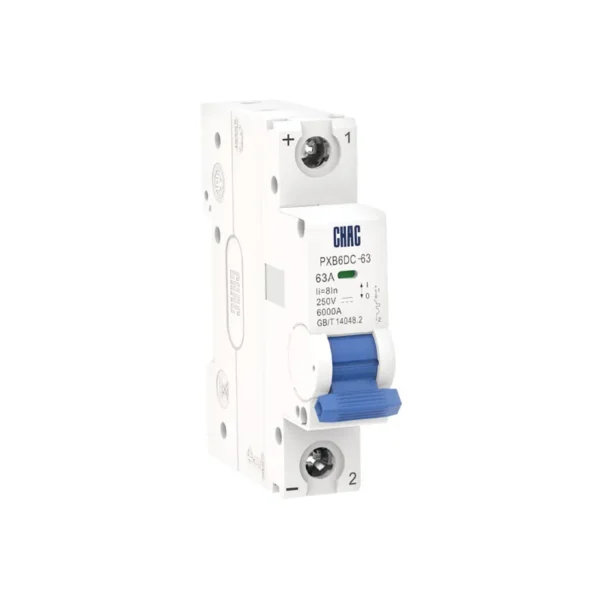
Compare AC or DC breaker data with the calculated load current and the actual supply.