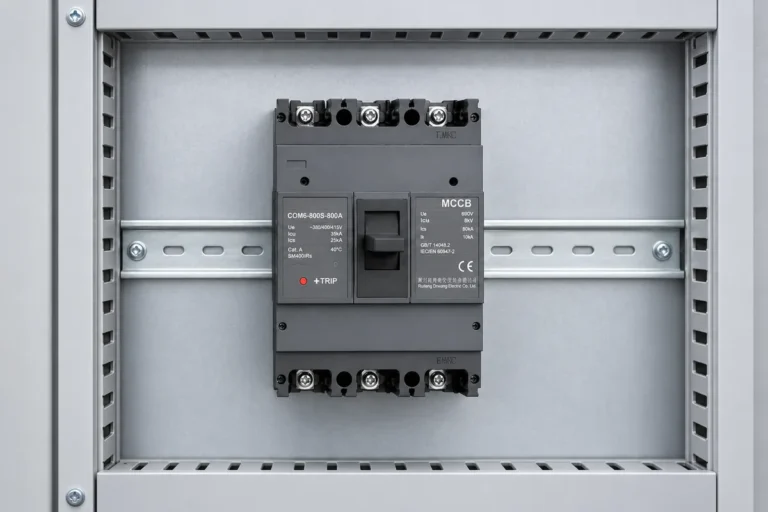
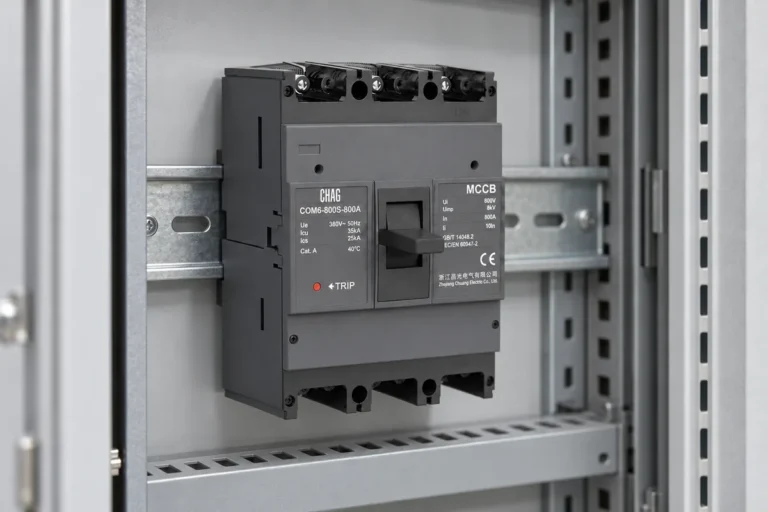
Before selecting a molded case circuit breaker platform for a private-label or distributor program, align the RFQ on rated current, breaking capacity, trip unit type, accessory architecture, and certification scope — then compare manufacturer responses on identical data.
This buying guide helps OEM program managers and distributor sourcing teams evaluate MCCB platforms without repeating device-class basics already covered in the MCCB vs MCB selection guide. For motor-control device choices in the same panel, see AC contactor vs relay selection.
Part 1. What belongs in an MCCB RFQ for OEM and distributor programs?
An MCCB RFQ for OEM or distributor lines should read like a platform specification, not a single catalog line item. IEC 60947-2 frames molded case circuit breakers as low-voltage circuit-breakers suitable for overload and short-circuit protection in distribution and feeder applications.
Minimum RFQ blocks:
| RFQ block | Buyer should define | Why suppliers need it |
|---|---|---|
| Electrical ratings | Rated current, poles, voltage / frequency | Determines frame size and catalog match |
| Breaking capacity | Prospective fault current at installation point | Validates Icu / Ics selection |
| Trip unit | Thermal-magnetic fixed vs electronic adjustable | Affects SKU, testing, and pricing |
| Accessory set | Shunt trip, undervoltage release, aux contacts, alarm | Drives modular BOM and tooling |
| Mounting / connection | Fixed, plug-in, cable or busbar orientation | Panel layout and SKU variants |
| Market marks | CE, CB, or other target compliance | Scope of test reports and label art |
| Private-label scope | Logo, packaging, manual language | OEM program deliverables |
If two suppliers quote different platforms on incomplete RFQ data, normalize the answers against this table before comparing unit price.
Part 2. How do rated current, poles, and breaking capacity narrow platform choice?
Rated current sets the frame. Breaking capacity sets whether that frame is electrically adequate at the installation fault level — not whether it physically fits in the panel.
| Decision input | Typical review question | Common sourcing mistake |
|---|---|---|
| Rated current (In) | Does the feeder or branch load match frame catalog steps? | Oversizing every SKU “for margin” |
| Poles (3P / 4P) | Is neutral switching required in the application? | Copying 3P BOM for 4P markets |
| Icu / Ics | Does declared capacity cover prospective fault current? | Using marketing kA without site data |
| Installation category | Indoor panel vs outdoor enclosure | Ignoring temperature and altitude derating notes |
Panel builders sourcing for multiple end markets often standardize on one MCCB platform with a small set of frame sizes, then map regional SKUs through accessory and labeling variants rather than maintaining unrelated breaker families.
Part 3. When should buyers specify thermal-magnetic versus electronic adjustable trip units?
Thermal-magnetic MCCBs use bimetallic and magnetic elements for overload and short-circuit tripping. Electronic adjustable units add configurable long-time, short-time, and instantaneous settings — useful when one platform must cover varied feeder profiles.
| Trip approach | Best fit when | Tradeoff |
|---|---|---|
| Thermal-magnetic (fixed) | Standard distribution feeders, cost-sensitive SKUs | Less flexibility per frame |
| Electronic adjustable | Multiple feeder types on one platform, selective coordination reviews | Higher unit cost, more setup data |
| Leakage-integrated MCCB | Residual-current function required in same device | Different test scope; not a generic MCCB substitute |
Specify trip preference in the RFQ. Switching trip philosophy after tooling approval usually changes test plans, labels, and accessory compatibility.
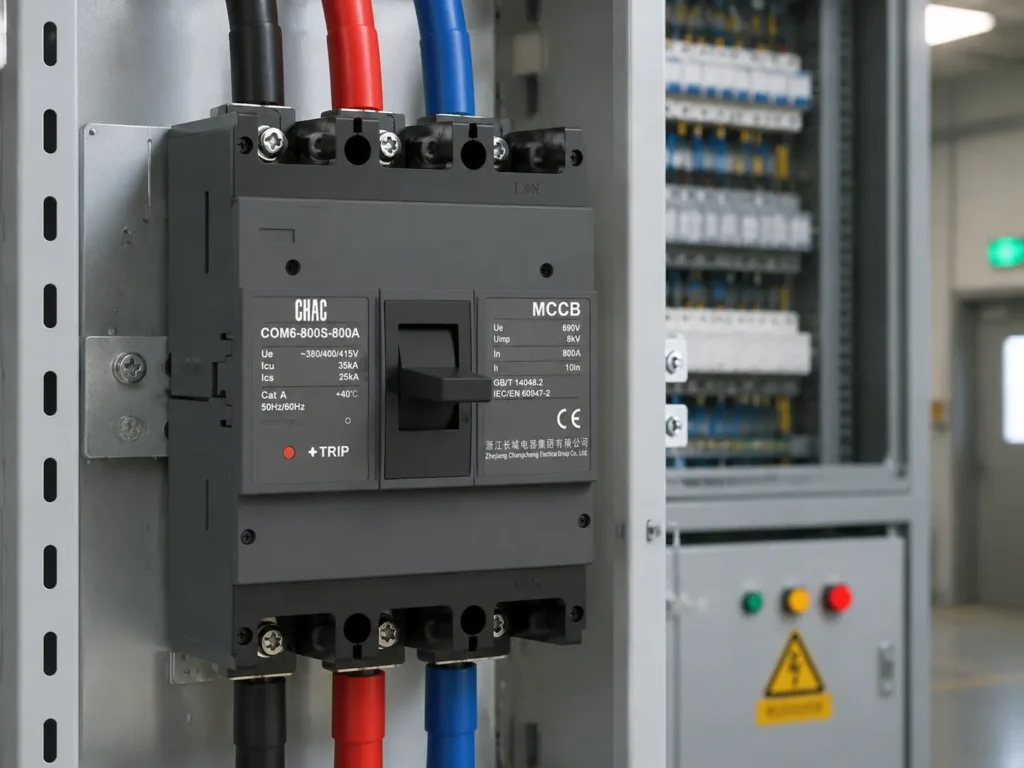
Part 4. Which accessories and modular options affect BOM cost and lead time?
MCCB economics for OEM lines depend heavily on modular accessories — not only the base breaker.
| Accessory / option | Function | RFQ note |
|---|---|---|
| Auxiliary contacts (NO/NC) | Status to PLC or indicator | Count and mounting style |
| Shunt trip (MX) | Remote opening | Coil voltage |
| Undervoltage release (MN/MV) | Drop-out on supply loss | Trip behavior vs safety concept |
| Alarm contact (SD) | Trip indication | Separate from aux status |
| Plug-in / withdrawable kit | Maintenance in large panels | Adds mechanical SKU variants |
Accessory families should be locked early. Adding shunt trip or aux blocks after mold and packaging approval often delays mass production even when the base breaker is unchanged.
Part 5. How does MCCB selection coordinate with upstream protection and motor branches?
MCCBs frequently sit below upstream ACBs or larger MCCBs and above MCB branches or motor starters. Coordination is a system question — not a single-device catalog choice.
| Branch type | MCCB role | Coordination reminder |
|---|---|---|
| Feeder from LV board | Main overload and fault break | Selectivity with upstream breaker |
| Sub-feeder to MCB panel | Intermediate protection | Short-circuit level at sub-board bus |
| Motor branch ( DOL / starter ) | Feeder protection to starter | Contactor + overload handle motor duty; see contactor vs relay guide |
| Mixed load panel | Shared platform across feeders | Trip unit choice affects multiple loads |
This article does not replace coordination studies or cable sizing. When fault levels or selectivity are unclear, request engineering review before freezing the platform BOM.
Part 6. Which CHAC MCCB platforms fit typical OEM routes?
CHAC publishes molded case circuit breaker platforms under the MCCB category within electrical distribution equipment, including standard and electronic adjustable series for OEM programs.
| Buyer scenario | CHAC starting point | RFQ emphasis |
|---|---|---|
| Standard thermal-magnetic platform | CQM6 Standard MCCB OEM Manufacturer | Frame sizes, Icu, auxiliaries |
| Adjustable protection curves | CQM6E Electronic Adjustable MCCB OEM Manufacturer | Trip settings, test documentation |
| Private-label distribution line | Power distribution customization | Branding, packaging, regional marks |
| Leakage-integrated variant need | CQM6L route on /mccb/ |
Residual-current requirements |
OEM RFQ checklist (summary)
| Submit to manufacturer | Purpose |
|---|---|
| Target In, poles, and voltage | Frame mapping |
| Prospective fault current or Icu requirement | Breaking capacity validation |
| Trip unit type | SKU and test path |
| Accessory bill | Modular BOM |
| Label languages and packaging | Private-label deliverables |
| Sample quantity and approval flow | Pilot run planning |
Use Contact CHAC Electric to send completed RFQ blocks for platform review.
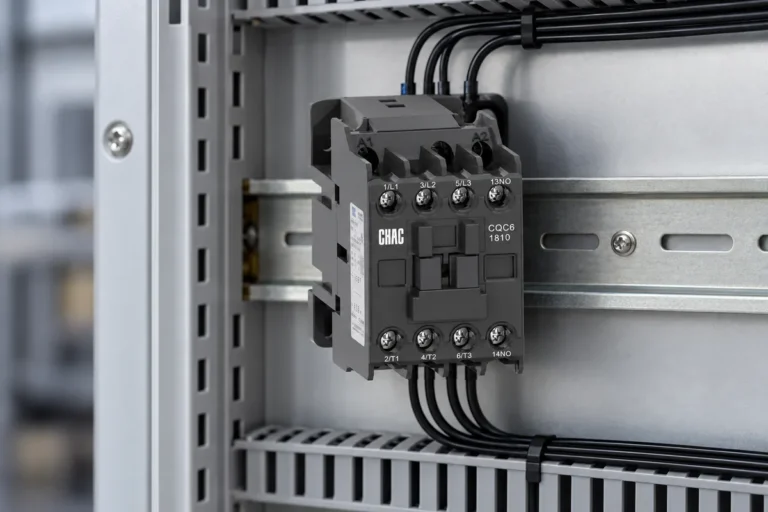
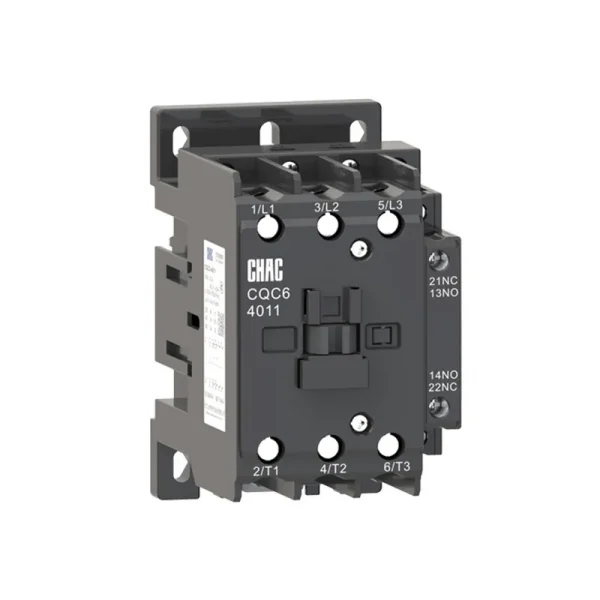
CHAC AC Contactor Recommended:
CQC6 Series Industrial AC Contactor OEM Manufacturer | CHAC Electric
Part 7. What are the fit boundaries for this buying guide?
This guide supports platform and procurement selection for low-voltage molded case circuit breakers in OEM and distributor programs. It does not replace:
- Short-circuit or selectivity coordination studies
- Cable and busbar thermal calculations
- Country-specific wiring-rule compliance proofs
- Medium-voltage breaker selection
- Arc-flash or maintenance procedure authoring
Do not assume one MCCB SKU covers motor overload, earth-leakage, and feeder protection without reviewing the full protection chain. When project data is incomplete, hold SKU approval until fault levels and trip requirements are confirmed.
FAQ
What is a molded case circuit breaker (MCCB)?
A molded case circuit breaker is a low-voltage circuit-breaker in an insulated molded housing, selected for overload and short-circuit protection on feeders and branches carrying higher current than typical MCB circuits. It is defined in industry practice under frameworks such as IEC 60947-2.
How is an MCCB different from an MCB?
MCBs serve lower-current branch protection in modular panels. MCCBs use molded frames for higher current feeders and support richer accessory modules. Device-class differences are covered in the MCCB vs MCB guide.
What should OEM buyers ask an MCCB manufacturer first?
Ask for frame catalog coverage (current and poles), declared breaking capacity, trip unit options, accessory compatibility, certification scope for target markets, and private-label deliverables (label art, manuals, packaging).
When is an electronic adjustable MCCB worth the cost?
When one platform must serve multiple feeder profiles, support coordination reviews with adjustable long-time and short-time bands, or reduce SKU proliferation across regional variants.
Do MCCBs protect motors by themselves?
MCCBs can protect feeder circuits to motor starters, but motor branches typically still need a contactor and overload device (or MPCB) for operational switching and sustained overcurrent protection. See the AC contactor vs relay guide for control-device selection.
Which accessories most often change OEM lead time?
Shunt trip, undervoltage release, and auxiliary contact blocks — especially when new coil voltages or contact counts require tooling or assembly line changes.
Can distributors rebrand CHAC MCCB platforms?
CHAC publishes OEM/ODM routes for power distribution products. Submit branding, packaging, and target market requirements through the power distribution customization page for program scoping.