Motor Current Calculator
Estimate motor full-load amps from shaft power in kW, voltage, efficiency and power factor. Check the estimate against the motor nameplate before selecting control gear.
Estimate full-load current before checking contactor, overload relay, or motor-protection ratings.
Result
Estimated motor current
20.75APreliminary calculationI = P × 1,000 / (√3 × V × PF × η)Estimate only. Use motor nameplate current for final protection and control-device selection. Starting current, duty and overload settings are not calculated.
Why this result?
Formula and method
Estimate motor full-load amps from shaft power in kW, voltage, efficiency and power factor. Check the estimate against the motor nameplate before selecting control gear.
How to use this calculator
- Enter the mechanical shaft output stated on the motor nameplate.
- Select supply type, voltage and the known AC power factor.
- Enter efficiency as a percentage.
Calculation limits
K is √3 for balanced three-phase and 1 otherwise. PF is omitted for DC. Efficiency η is used as a decimal. Starting duty and manufacturer ratings require separate verification.
Motor FLA: estimating full-load amps from shaft power
A motor must draw more electrical power than it delivers at the shaft because some energy is lost as heat and other losses. Efficiency accounts for this difference. AC power factor is a separate relationship between real and apparent power; both affect a current estimate.
Input notes
| Input | What to check |
|---|---|
| Shaft power | Use the mechanical output rating in kW at the operating point being assessed. Do not enter electrical input power as shaft output. |
| Efficiency | Enter a percentage, such as 90 for 90%. The equation uses the decimal 0.90. |
| Voltage and PF | Use line-to-line voltage for a balanced three-phase motor and the corresponding operating power factor. Both PF and efficiency can vary with load. |
Worked example · initial form values
11 kW motor at 90% efficiency
Three-phase · 400 V · PF 0.85 · shaft output 11 kW · efficiency 90%
Electrical input = 11 / 0.90 = 12.22 kW
I = 11,000 / (√3 × 400 × 0.85 × 0.90)
Estimated running current = 20.75 A
20.75 A
This estimates running current at the stated output, efficiency and power factor. It does not predict locked-rotor current or the supply current of a variable-speed drive.
Using the result for motor control
- Use nameplate current and the manufacturer’s instructions for the actual voltage and winding connection when setting overload protection.
- Check contactor utilization category, starts per hour, starting method and protective-device coordination. Running amperes alone do not define the required motor starter.
Frequently asked questions
Should I use this estimate or the motor nameplate?
Use the manufacturer’s nameplate current for final control and protection selection. This estimate helps when only shaft power, efficiency and power factor are available.
Are efficiency and power factor the same thing?
No. Efficiency compares shaft output with real electrical input. Power factor compares real with apparent AC power. A motor can have high efficiency and still draw reactive current.
Can I calculate starting current with this tool?
No. Starting current depends on motor design, starting method and supply conditions. Use manufacturer data for direct-on-line, star-delta, soft-starter or drive applications.
Is the estimate valid on the input side of a VFD?
Not as a drive-input calculation. Drive losses, harmonics and input power factor differ from the motor-terminal conditions used here. Check the drive manufacturer’s input-current data.
Need help choosing a CHAC product?
Send the system voltage, load current, and installation conditions with your inquiry.
Application example · Illustrative inputs
Estimating current for a 15 kW pump control panel
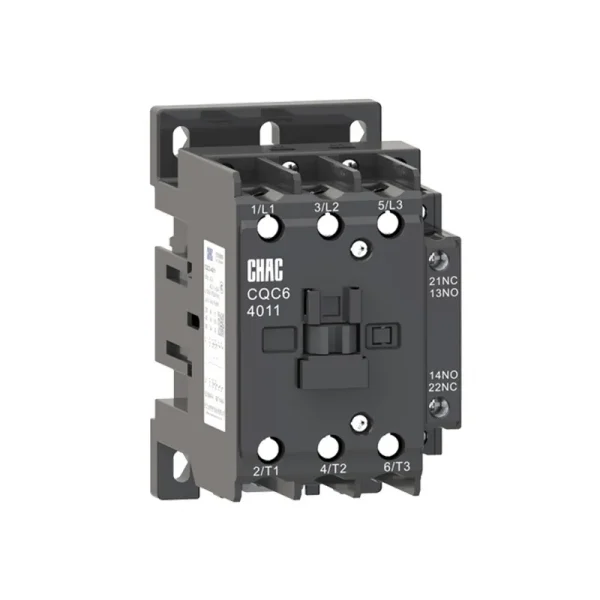
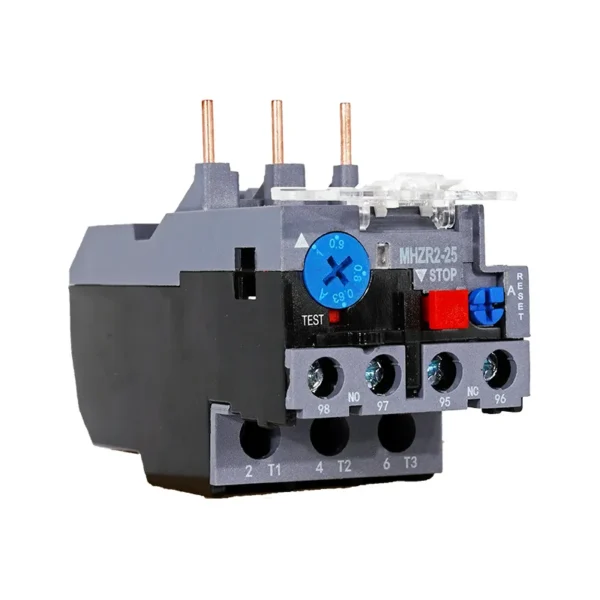
When preparing a pump control panel before the final motor nameplate is available, shaft power alone is not enough to estimate current. A 15 kW motor at 400 V three-phase, power factor 0.85 and 90% efficiency gives 28.30 A in this calculator. That estimate helps narrow the CHAC CQC6 contactor and CQR2 overload-relay data to review. It does not establish a complete starter combination. Once the motor is confirmed, use its actual nameplate current and starting duty to check the contactor ratings, overload range and short-circuit protection.
Product data: CQC6 Series Industrial AC Contactor OEM Manufacturer · CQR2 Series Thermal overload relay
Related CHAC products
Use the motor nameplate current to review switching and protection equipment.